How Blockchain Ledgers Are Reshaping Audit Trails for Multi-Jurisdictional Gaming Licenses
Sofia Jenkins · Aug 17, 2026
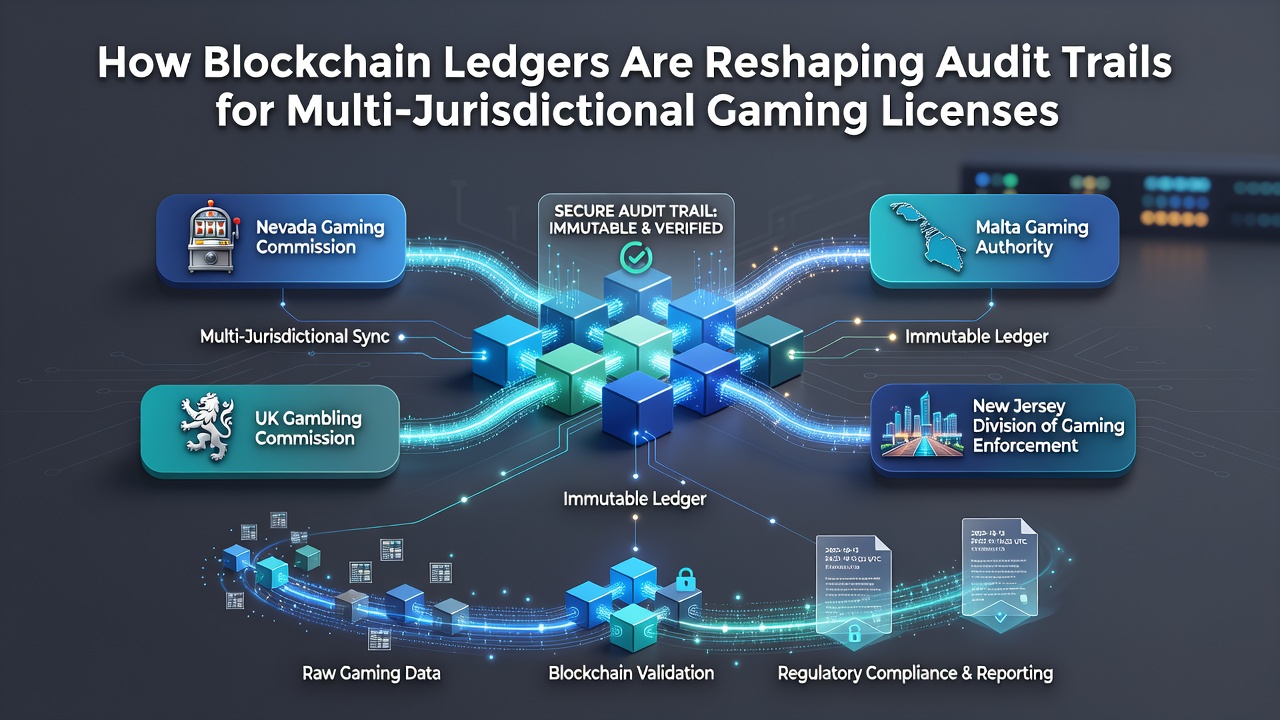
How Blockchain Ledgers Are Reshaping Audit Trails for Multi-Jurisdictional Gaming Licenses
Blockchain technology has entered the regulatory frameworks that govern gaming licenses spanning multiple countries and states, and observers note how distributed ledgers now create permanent, tamper-resistant records of every transaction, approval, and compliance event. Regulators in places like Nevada and Malta have begun integrating these systems to track license histories that cross borders, while data from industry reports shows a rise in adoption since early 2025. Those who manage multi-jurisdictional operations find that traditional paper trails and centralized databases often leave gaps when authorities in one region request verification from another.
Immutable Records Replace Fragmented Logs
Traditional audit trails in gaming rely on siloed databases maintained by individual operators and regulators, yet these setups create delays when one jurisdiction questions activities licensed elsewhere. Blockchain addresses that issue by recording each action as a block that links chronologically to previous entries, and once added the entry cannot be altered without detection across the entire network. Research from academic institutions tracking regulatory technology indicates that such ledgers cut verification times by up to 60 percent in pilot programs running through mid-2026.
Operators holding licenses in both North American and European markets now feed transaction data directly into shared ledgers, and regulators gain simultaneous access without needing formal data requests that once took weeks. In August 2026 several Canadian provinces updated their gaming statutes to accept blockchain-based submissions as primary evidence during license renewals, a move that aligned their processes with similar updates already in place in parts of Australia.
Smart Contracts Automate Compliance Checks
Smart contracts embedded in blockchain platforms execute predefined rules automatically when conditions are met, and this automation proves especially useful for multi-jurisdictional gaming where tax rates, age verification standards, and reporting frequencies differ by location. A contract might release funds only after confirming that a player meets the stricter of two overlapping regulatory requirements, for example, while simultaneously logging the decision for later review. Figures released by the European Gaming and Betting Association reveal that operators using these contracts reported fewer compliance discrepancies during cross-border audits conducted in teh first half of 2026.

Those who oversee license portfolios spanning multiple continents point out that the same contract can trigger alerts to all relevant authorities the moment a threshold such as daily betting volume is crossed, eliminating the need for separate notifications. The approach reduces human error in record-keeping while preserving an unbroken chain of custody that courts and regulators can examine at any time.
Cross-Border Data Sharing Without Central Authority
Multi-jurisdictional gaming licenses require coordination among bodies that do not share a single database or even compatible formats, yet blockchain networks allow each participant to hold an identical copy of the ledger while maintaining control over their own nodes. This structure supports real-time visibility without forcing any single government to host teh complete record. A 2025 study conducted by researchers at the University of Nevada, Las Vegas examined how such networks handled license transfers between U.S. states and offshore partners, and the findings showed consistent accuracy across more than 12,000 simulated transactions.
Authorities in Australia’s Northern Territory and several U.S. tribal gaming commissions began testing interoperable blockchain modules in late 2025, and by August 2026 the pilots had expanded to include live data feeds from licensed operators. The shared visibility lets each regulator confirm that an operator meets local standards without duplicating storage costs or risking data mismatches that once arose during manual reconciliation.
Reduced Fraud and Faster Dispute Resolution
Fraud detection improves when every entry carries a cryptographic timestamp and digital signature that all network participants can verify independently. In cases involving disputed license transfers or questioned player fund movements, investigators can trace the exact sequence of events back to the originating block instead of relying on potentially conflicting internal logs. Industry associations tracking gaming technology adoption report that blockchain-based trails have shortened the average time needed to close audit disputes from 45 days to under 12 in participating jurisdictions.
Operators note that the same transparency also deters attempts to alter records retroactively, because any change would require consensus from nodes controlled by multiple independent regulators. This built-in resistance has prompted additional jurisdictions to explore blockchain integration ahead of scheduled license renewal cycles in 2027.
Conclusion
Blockchain ledgers continue to integrate into the audit infrastructure supporting multi-jurisdictional gaming licenses, and the resulting records offer regulators and operators a consistent, verifiable history that spans borders. As more regions align their systems with these networks, the volume of shared data grows, yet the core advantage remains the same: an immutable sequence of events that stands up to scrutiny from any participating authority. Continued pilots and statutory updates through 2026 suggest the trend will expand rather than reverse in coming years.